
The Leprosy Research Initiative (LRI) is pleased to announce the launch of its new Multi-Annual Strategic Plan (2026-2029), outlining the organisation's priorities and direction for the coming years.
Developed in consultation with partners and stakeholders and persons affected by Leprosy, the new strategy reinforces LRI's role as a global research funding partnership committed to advancing knowledge, strengthening research capacity, and translating evidence into meaningful improvements for persons affected.
Building on a shared vision
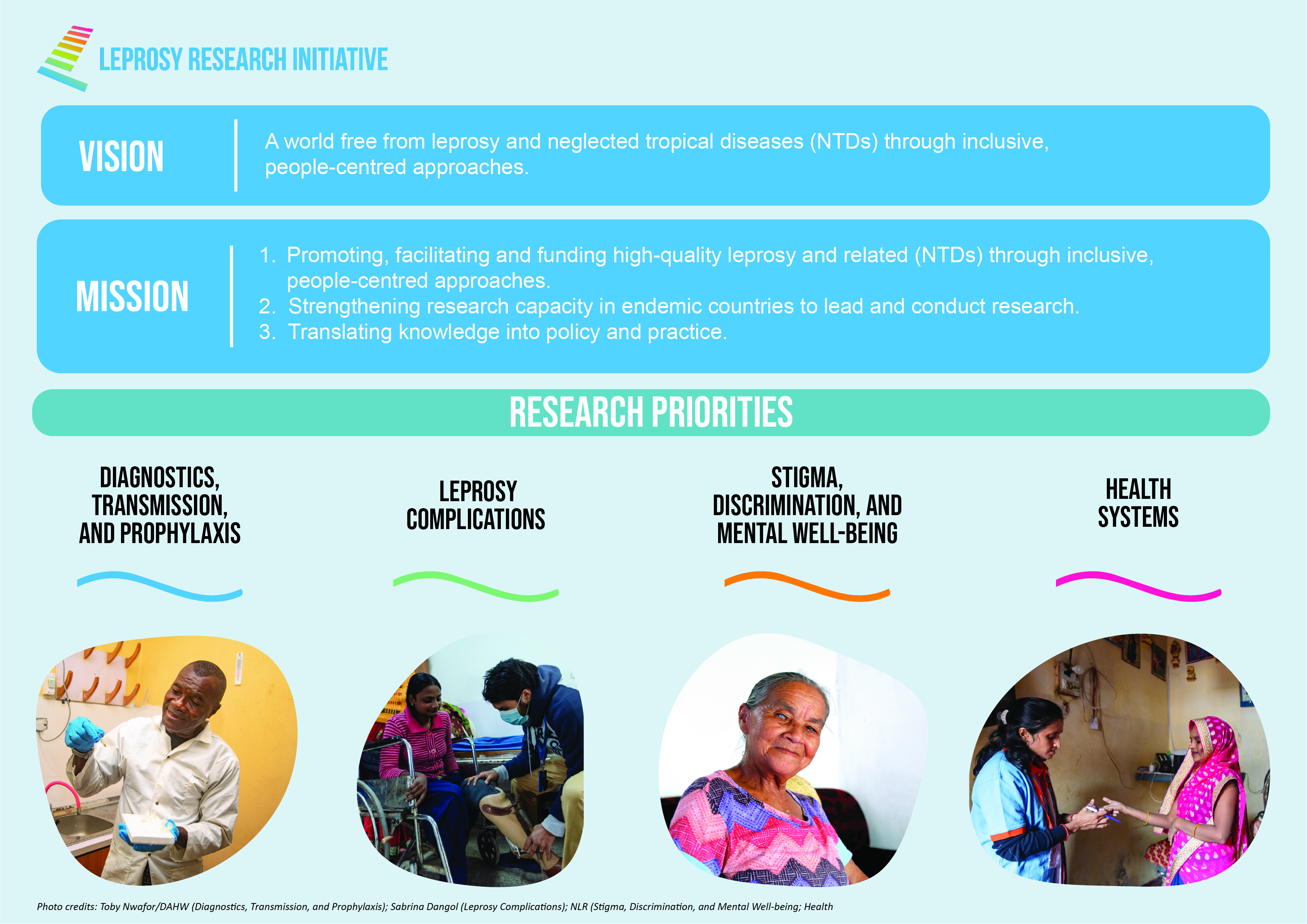
LRI's vision remains clear: a world free from leprosy and neglected tropical diseases (NTDs) through inclusive, people-centred approaches.
To achieve this vision, the organisation will focus on three interconnected objectives:
- Promoting, facilitating and funding high-quality research on leprosy and related NTDs.
- Strengthening research capacity and leadership in endemic countries.
- Supporting the translation of research findings into policy and practice.
Updated research priorities
The strategy introduces a refined funding framework built around four cross-cutting principles:
- Leprosy Plus: promoting research that addresses leprosy alongside other NTDs, disabilities, and health conditions with shared challenges and opportunities.
- Integration: understanding how leprosy services can be effectively embedded within broader health systems.
- Translation: ensuring research findings are actively used to inform programmes, policies, and services.
- Cost-Effectiveness: generating evidence to support efficient and sustainable investments in leprosy and NTD programmes.
These principles will guide research investments across four research priority themes:
- Diagnostics, Transmission and Prophylaxis
Supporting research that contributes to interrupting transmission through improved diagnostics, transmission tracking, genomic surveillance, antimicrobial resistance monitoring, and next-generation prophylactic approaches.
- Leprosy complications
Advancing evidence on the prevention and management of leprosy-related complications, including reactions, chronic pain, nerve damage, disability, and post-treatment consequences.
- Stigma, Discrimination and Mental well-being
Promoting research that addresses the social and psychological dimensions of leprosy, including stigma reduction, psychosocial support, inclusion, empowerment, and mental well-being.
- Health systems
Strengthening evidence on integrated care, surveillance, active case-finding, contact tracing, supply chains, access to treatment, and approaches that improve services for underserved populations.
From evidence to action
A defining feature of the new strategy is LRI's continued commitment to strengthening research capacity in endemic countries. By supporting researchers and institutions closest to the challenges faced by affected communities, LRI aims to foster locally led solutions with sustainable impact.
The strategy also places greater emphasis on research translation, recognising that evidence only achieves its full value when it informs decision-making, policy, and practice.
Looking ahead
As LRI enters this new strategic period, the organisation remains committed to supporting excellent, equitable, and impactful research that contributes to better health outcomes and improved quality of life for persons affected by leprosy and related NTDs worldwide.